
The origin of AIGC
AIGC (AI-Generated Content), or AI-generated content, is an innovative technology that uses artificial intelligence technology to discover patterns from existing data models and automatically generate various types of content, including but not limited to articles, videos, images, music and code, etc. With the continuous advancement of artificial intelligence technology, AIGC has become an emerging technology widely applied in various industries, bringing profound impacts on our lives and work. The innovative power of AIGC technology is penetrating into multiple fields such as content creation, personalized marketing, education and training, customer service, and entertainment experience, driving the development and innovation of these industries. It not only enhances work efficiency but also greatly increases user satisfaction by providing customized services and immersive experiences. In addition, AIGC technology also promotes cross-cultural communication and data-driven decision-making, providing a powerful accelerator for the digital transformation of enterprises. Through AIGC technology, enterprises can respond more quickly to market changes, create new value, and maintain a leading position in a highly competitive market. With the continuous evolution of technology, we look forward to AIGC demonstrating its potential in more fields in the future and bringing more innovation and convenience to society.
Classification of AIGC software products
Currently, there is a wide variety of AIGC software available on the market, mainly divided into numerous categories such as text generators, image generators, video generators, music generators, and code generators. These intelligent software products, relying on powerful artificial intelligence technology, can magically generate all kinds of digital content automatically, such as exquisite articles, realistic images and captivating videos, etc. They have already permeated multiple fields such as content creation, design, entertainment, education and business, not only significantly enhancing the efficiency of content generation, but also greatly enriching the diversity of content. However, while enjoying the convenience and efficiency brought by these intelligent software, we also have to think about deep-seated issues such as copyright, prejudice and morality. In addition to the above factors, we also need to pay attention to the core elements of AI software products such as security, performance efficiency and code security. These aspects are precisely what enterprise-level AIGC end users are most concerned about.
The content and methods of software acceptance testing
Acceptance testing covers three core testing areas: functionality, performance and safety.
ForFunctional testingWe have meticulously designed detailed test cases in strict accordance with the software requirements specification and design documents, and conducted thorough tests on every function of the software. During the testing process, we paid special attention to the accuracy of data processing, the rigor of business logic and the smoothness of interface interaction of the software to ensure that every function of the software is complete and meets the preset expectations.
inPerformance testIn this stage, we employed methods includingPressure testA variety of advanced methods, including load testing, were employed to deeply evaluate key performance indicators of the software such as response time, data throughput, and the number of concurrent users. After multiple rounds of debugging, testing parameters and simulating various scenarios, we are committed to ensuring that the software can maintain a stable operating state even under high load pressure, thereby demonstrating its outstanding reliability.
Regarding the security testing phase, we conducted a comprehensive review of the potential security risks and vulnerabilities of the softwareSecurity Vulnerability ScanAnd in-depth permeability testing. These meticulous security testing efforts aim to promptly identify and address potential security risks, thereby significantly enhancing the security protection level of the software.
Software acceptance test report
During the research and development process of AIGC software products, we are well aware that software quality is crucial to the success of the products. Functionality, performance efficiency, security and code security are all key elements that we strictly monitor. To ensure that the software meets high standards in all these aspects, we have carried out rigorous software acceptance tests and accordingly compiled a detailed "Software Acceptance Test Report". This report not only demonstrates our relentless pursuit of excellence in product quality, but also highlights our responsible attitude towards users. During the acceptance testing period, we verified the software functions one by one to ensure that they precisely met the user's needs. A thorough assessment of performance and efficiency was conducted to ensure the smooth operation of the software. At the same time, we also attach great importance to security and code stability, striving to provide users with the most reassuring experience. After this series of meticulous tests, we have carefully compiled this software acceptance test report, which details the test process, data analysis and improvement suggestions. This report is not only our solemn commitment to product quality, but also our firm belief in pursuing user satisfaction. It will serve as a valuable guide for us to continuously optimize AIGC software products and enhance user experience.

Test basis
The test takes GB/T 25000.51-2016 "Systems and Software Engineering - Systems and Software Quality Requirements and Evaluation (SQuaRE) - Part 51: Quality Requirements and Test Details for ready-to-use Software Products (RUSP)" as the core test standard to conduct a comprehensive evaluation of the software products. The test content covers multiple key features of the software, such as functionality, reliability, performance efficiency, ease of use, maintainability, and portability. At the same time, a detailed review of the software documentation is also conducted to ensure that the software product meets the predetermined quality standards.
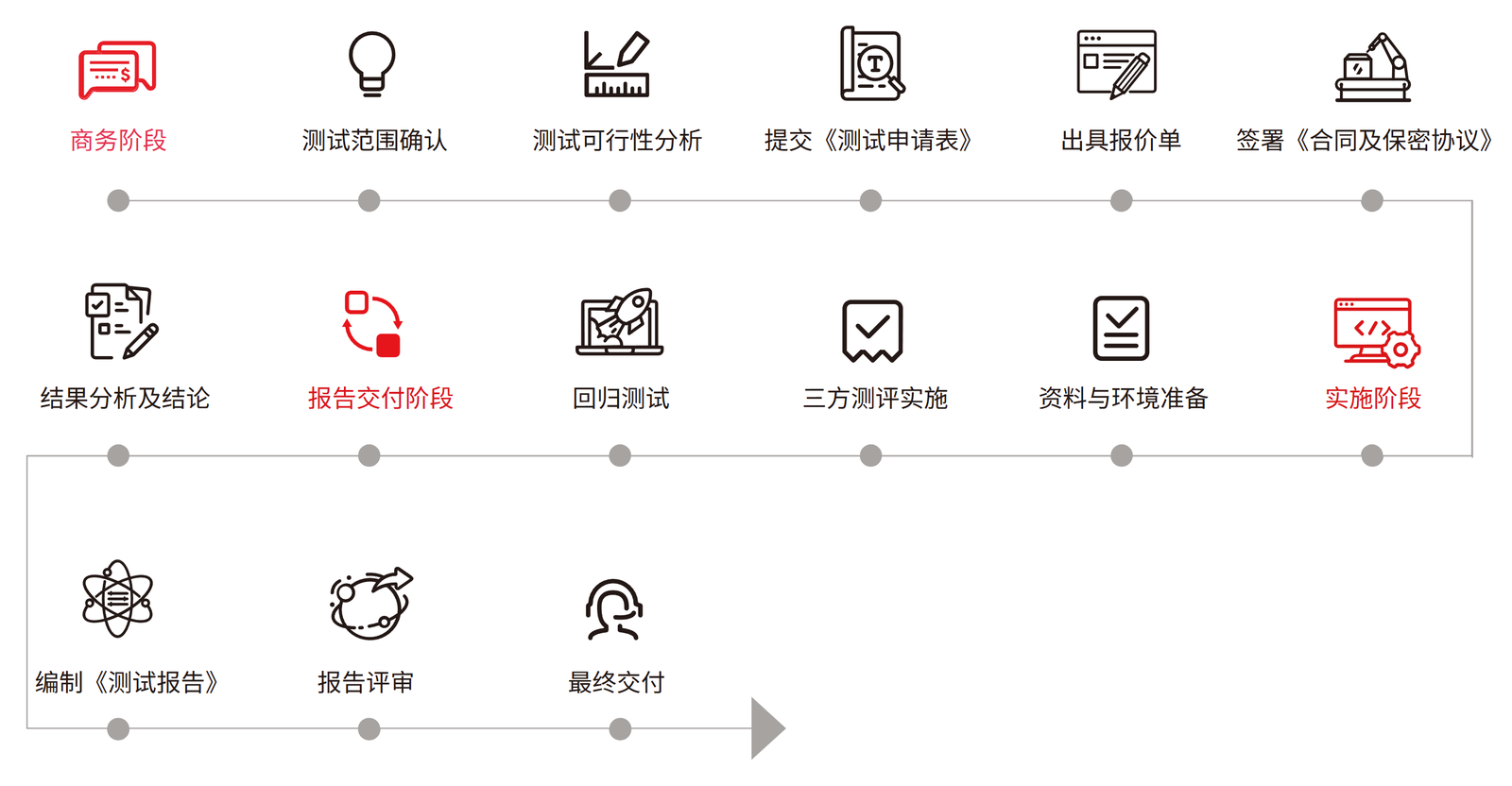
Business Process
Constraint conditions
Sign the "Software Testing Entrustment Contract" and the "Confidentiality Agreement
Test cycle
The Software Acceptance test Report will be issued within 2 to 7 working days.
Service area
Beijing, Shanghai, Tianjin, Chongqing, Liaoning Province, Heilongjiang Province, Jilin Province, Guangdong Province, Hainan Province, Fujian Province, Hunan Province, Sichuan Province, Chongqing Municipality, Guizhou Province, Yunnan Province, Guangxi Province, Hubei Province, Henan Province, Shandong Province, Gansu Province, Xinjiang Province, Xizang Autonomous Region, Hebei Province, Shaanxi Province, Shanxi Province, Zhejiang Province, Jiangsu Province and other regions.