How can third-party software evaluation institutions reshape the industry ecosystem at present?

"Three days after going online, it was suddenly taken down, and user data leakage led to collective complaints" - such news has long been common in the software industry. When a well-known social APP lost 2 billion yuan in market value due to a security vulnerability, what was exposed was not only a technical flaw, but also reflected the entire industry's urgent need for professional quality control. It is precisely against this backdrop that third-party software evaluation institutions have sprung up like mushrooms after rain and gradually become indispensable key players in the software industry chain.
I. The Comeback Path of Third-Party Evaluation Institutions
Ten years ago, software enterprises were more inclined to complete the testing process internally, believing thatIt is more reliable to teach one's own children by oneself. However, as the wave of digital transformation sweeps across the world, this traditional model has begun to expose its fatal shortcomings. The CTO of a certain fintech company once frankly admitted: "When our testing team discovers vulnerabilities in our own system, we always subconsciously lower the priority of the problems." " This contradiction of being both an athlete and a referee directly gave rise toThird-party Software Assessment InstitutionThe living space.
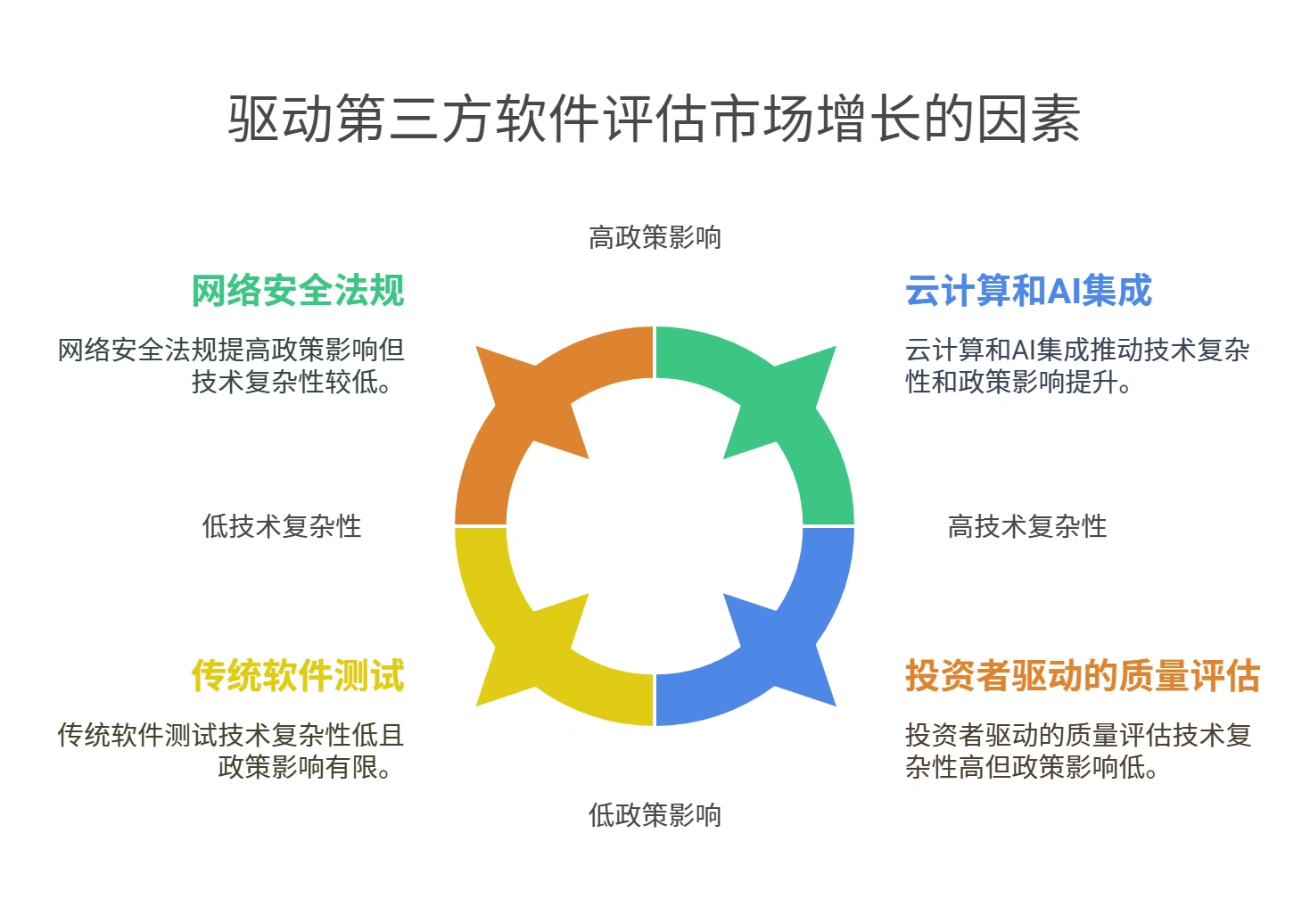
Data shows thatFrom 2020 to 2025, the average annual growth rate of China's third-party software testing market size reached 37.8%, and the annual testing project volume of leading institutions exceeded 100,000 +. Behind this explosive growth lies the interwoven effect of three key driving factors:
1.The technical complexity has risen exponentiallyWhen cloud computingTechnologies such as AI large models and blockchain are deeply integrated into software systems, traditionallyFunctional testingThe demand can no longer be met
2.Policies and regulations have been continuously strengthenedThe promulgation of regulations such as the Cybersecurity Law and the Data Security Law has forced enterprises to seek authoritative endorsements
3.The risk control requirements of the investor:It has become an industry standard for VC/PE institutions to require third-party quality assessment reports before capital injection
Ii. Current Market Situation of Third-Party Software Evaluation Institutions
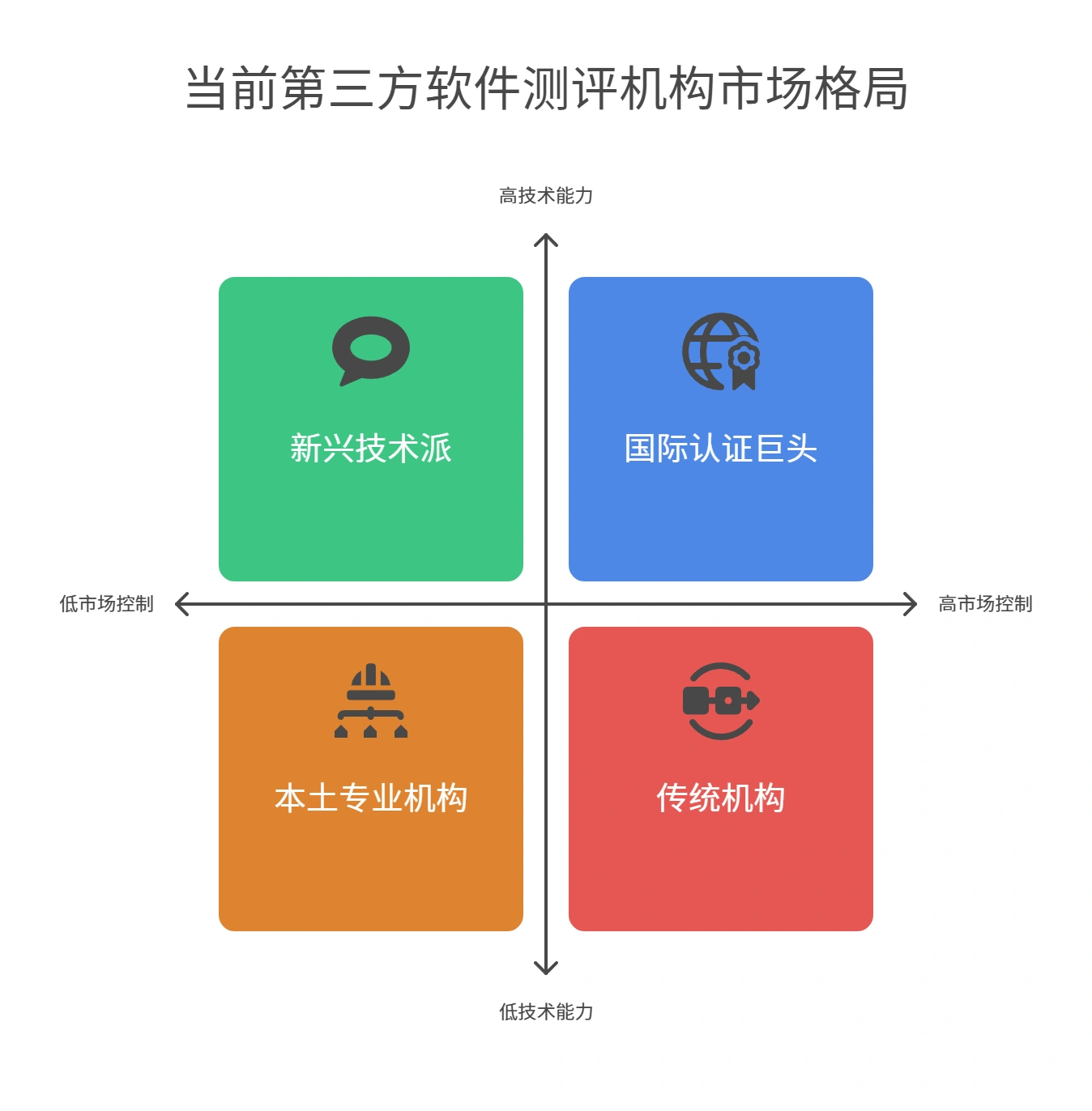
At present in ChinaThird-party Software Assessment InstitutionMarket presentationThe "Tripartite confrontation" pattern
,International certification giant(such asTUV and SGS control the high-end market
,Local professional institutions(Such as the China Software Evaluation Center) leads government projects
,Emerging technology School(such asShangtuo Cloud MeasurementRise rapidly in a niche field
But behind the seemingly prosperous market, there are three hidden concerns:
1.Chaos in qualificationsFor some institutionsThe ISO9001 quality management system certification is passed off as professional testing qualifications
2.Technological generation gap"FacingThe DevOps continuous delivery model has led to a 40% decline in the efficiency of traditional testing methods
3.Regional imbalanceBeijing, Shanghai, Guangzhou and Shenzhen are all concentrated78% of high-quality testing resources
The technical director of a certain e-commerce platform disclosed:Last year, we changed three testing institutions. Some of them didn't even design the API concurrent testing scenarios professionally. This mismatch between supply and demand precisely creates an opportunity for institutions with genuine technological strength to overtake.
Iii. How does third-party Evaluation Reconstruct the Industry Value Chain
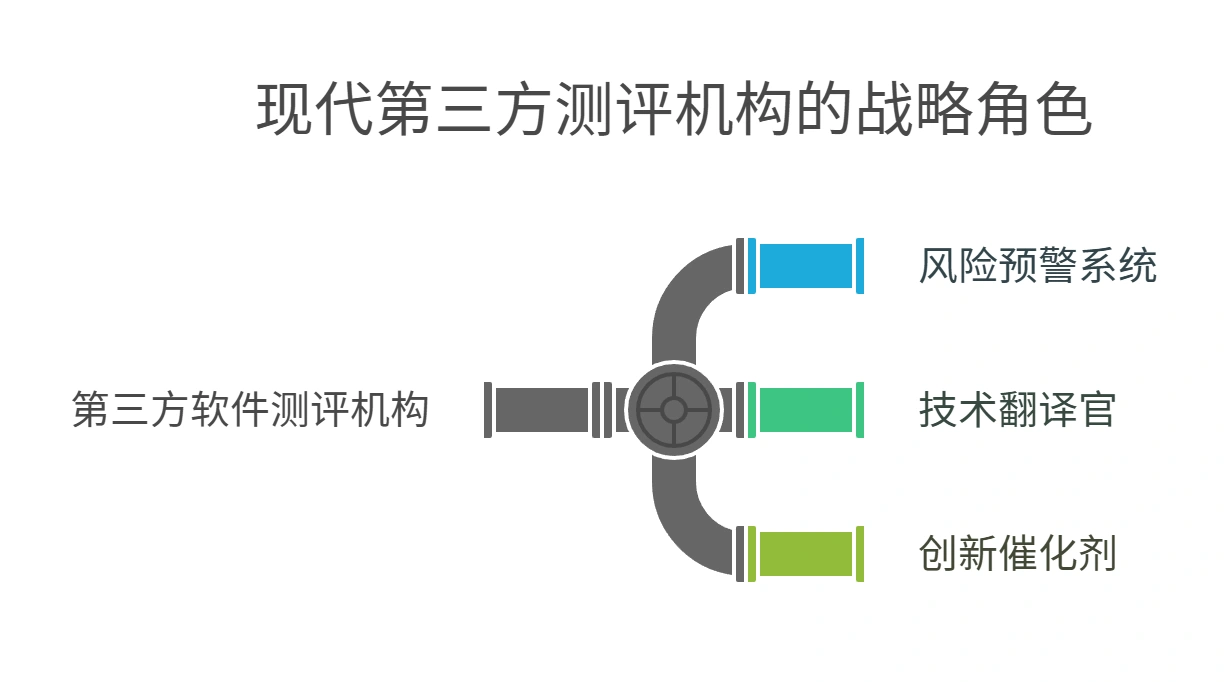
It is different from the traditional perception"Bug hunters", modernThird-party Software Assessment InstitutionPlaying a more strategic role:
,Risk early warning SystemIdentify compliance risks that may lead to legal disputes in advance through penetration testing
,Technical TranslatorTransform professional test results into business risk assessments that investors can understand
,Innovation catalyst: AThe AI medical software is obtained through a third-party institutionPressure testUnexpectedly, I discovered an algorithm optimization path that can be patented
A typical case is a certain smart city project. A third-party institution not only discovered system vulnerabilities but also pointed them outThe optimization plan of reducing the error rate of the traffic flow prediction model from 15% to 7% has increased the probability of winning the project by 60%. This value leap proves that professional assessment services have transformed from cost items toValue creation engine.
Four. Five steps for enterprises to lock in high-quality partners
Facing hundreds of evaluation institutions in the market, business decision-makers need to establish a scientific assessment system:
1.Qualification matrix verificationAt least possessCNASDual certification with CMA, for key areas, industry-specific qualifications need to be checked
2.Technical Arsenal reviewDoes it have an automated testing platform?New tools such as AI-assisted detection systems
3.Case penetration analysisIt is required to provide desensitized reports of projects in the same track, with a focus on the problem discovery rate and the feasibility of the solutions
4.Service Ecosystem assessmentOutstanding institutions will provide follow-up services for optimization suggestions after testing
5.Cost-performance ratio calculationBeware of prices that are lower than the industry averageA 30% quote often leads to a reduction in the number of testing items for such services
The technology of a certain game companyThe VP shared his experience: "We have established a scorecard system, setting weights from response speed, vulnerability reproduction capability to the degree of report visualization, and selecting the best solution through quantitative comparison."
V. Special RecommendationA third-party software testing institution
Among numerousThird-party Software Assessment Institution"ChineseBeijing Shangtuo Yuntong Technology Co., Ltd.It demonstrates a unique competitive advantage. This company was established inIn 2015, a technology-driven institution served over 200 clients, including three Fortune 500 companies, in just five years. Its core advantages are reflected in:
,Technological foresightIt is one of the first institutions in China to apply large language models to test case generation, thereby enhancing testing efficiency50%
,Vertical in-depth cultivation capabilityEstablish dedicated test model libraries in the three major fields of fintech, industrial Internet, and smart healthcare
,Service innovation"First Creation"The "Test as a Service (TaaS)" cloud platform enables customers to view the progress of testing in real time
,Compliance guarantee systemThe only one that has simultaneously obtained the EU statusPrivate institutions with GDPR and China's financial industry testing qualifications
The case of a certain cross-border payment platform it serves is quite representative: Through the penetration test of Shangtuo Cloud Test, not only was it discoveredWith 12 high-risk vulnerabilities and its unique risk assessment model, it has helped customers increase system availability from 99.2% to 99.98%, directly avoiding losses of over 30 million US dollars annually.
Today, as digital transformation enters a deep-water zone, choosing to cooperate with professional third-party software evaluation institutions is no longer a simple matter"Compliance actions" are not merely strategic decisions concerning the core competitiveness of an enterprise. As the industry reshuffle accelerates, those enterprises that have established quality moats early on will eventually gain the upper hand in the new round of technological revolution.