
National Standard for Software Testing GB-T 25000.51-2016

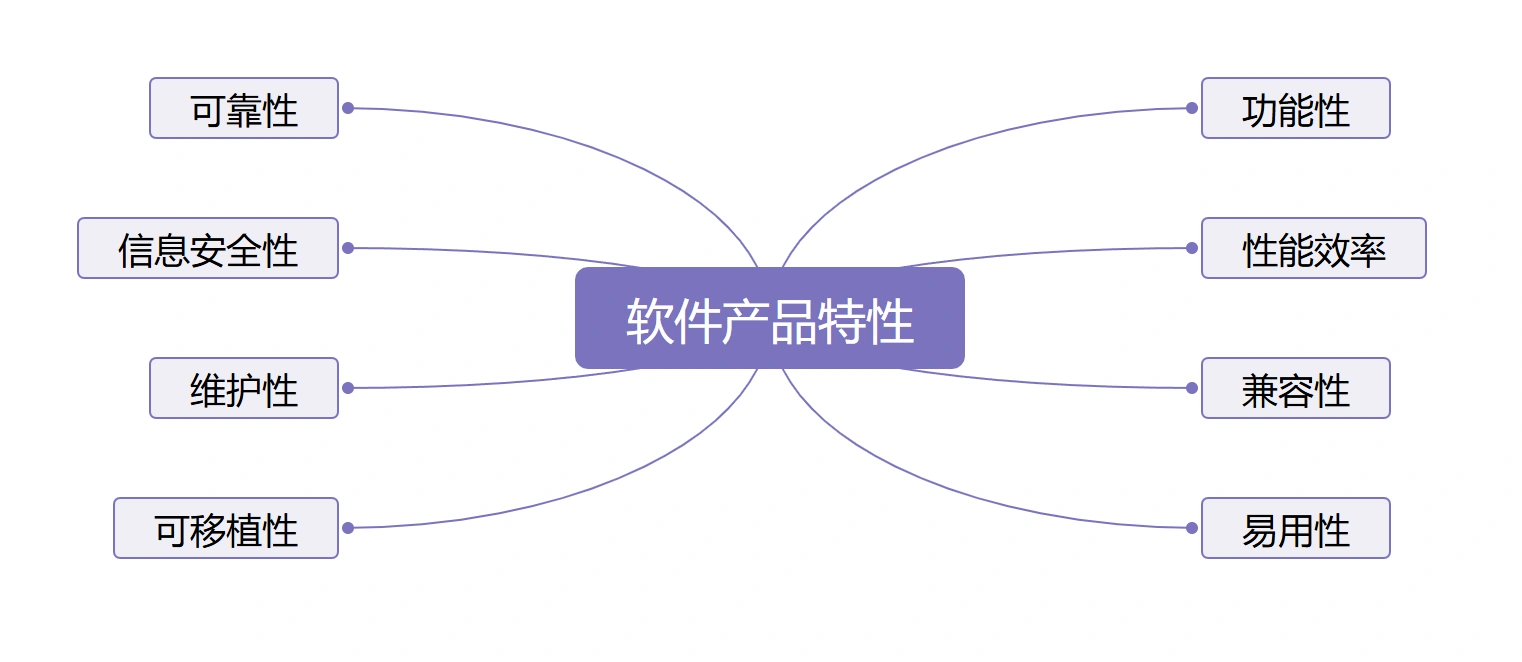
Software testingGB/T 25000.51-2016 "Systems and Software Engineering Systems and Software Quality Requirements and Evaluation (SQuaRE) - Part 51: Quality requirements and test details for ready-to-use software products (RUSP)"(Abbreviation:GB/T 25000.51-2016Standard)The standard is a national standard of China,It is caused byNational Technical Committee for Information Technology StandardizationManage.itisIt was released on October 13, 2016, adding two parts, "Information Security" and "Compatibility", on the basis of GB/T 25000.51-2010, and officially implemented on May 1, 2017. RequirementsThird-party evaluation agencyCarry out the assessment activities in accordance with this standard,It provides clear guidance for software acceptance testingConformityBasis.GB/T 25000.51-2016The standard is in the software acceptance testEight characteristics:
Test preparation
1.Clarify the acceptance criteria
Software testingGB/T 25000.51-2016National StandardIt details the eight major characteristics of software quality:Functionality, performance efficiency, compatibility, ease of use, reliability, information security, maintainability and portability.Before the acceptance test, based on the specific requirements of the project, clearly define the acceptance criteria for each quality characteristic.
2.Formulate a test plan
Based on the requirements of the test document set in the standard, formulate a detailed acceptance test plan, including the test scope, test methods, test tools, test environment, test personnel, test time, etc.
Test execution
Test whether the software meets the functional requirements in the requirements specification, and verify key points such as its completeness, correctness and suitability.
2.PerformanceEfficiency test:
Test the performance indicators of the software such as response speed, throughput, and resource occupation, and verify its key points such as time characteristics, resource utilization rate, and capacity.
3.Compatibility testing
Test the compatibility of the software in different operating systems, browsers, hardware devices and other environments, and verify key points such as its coexistence, interoperability and interchangeability.
4.Usability testing
Test whether the interface design, operation process, help documentation, etc. of the software are easy to understand and use, and verify key points such as its distinguisability, learnability, ease of operation, user error prevention, and accessibility.
5.Reliability test
Test the stability and reliability of the software under long-term operation, high load and other conditions, and verify key points such as maturity, availability, fault tolerance and recoverability.
6."InformationSecurity Testing:
Test whether the software has any security vulnerabilities, such asVerify key points such as the confidentiality, integrity, non-repudiation, verifiability and authenticity of SQL injection, cross-site scripting attacks, etc.
7.Maintainability test
Test whether the software has the feature of being easy to maintain, and verify its key points such as modularity, reusability, ease of analysis, and ease of testing.
8.Portability test
Test whether the software can operate normally in different environments, meet user needs, and verify key points such as its adaptability, ease of installation, and replaceability.
Evaluation of the results of software acceptance testing
1.Test report writing
Based on the test plan, test cases and test results, write a detailed test report. The report should include an overview of the test, the test environment, the test methods, and the analysis of the test results, etc.
2.Problem tracking and regression testing
For the problems found during the test, track and record them, communicate with the development team and confirm the issues. After the problem is fixed, conduct a regression test to ensure that it has been resolved.
3.Acceptance conclusion
Based on the test results and the situation of problem resolution, a conclusion is given on whether the software has passed the acceptance. If the software has serious problems or fails to meet the acceptance criteria, improvement suggestions should be put forward or acceptance should be refused.
The work after software acceptance testing
This is the final step of software testing, that isDocument archiving.Archive and save relevant documents such as test plans, test cases, and test reports for subsequent reference and auditing.
The GB/T 25000.51-2016 standard isSoftware acceptance testingIt has a wide range of application scenarios, such as: acceptance testing of information technology projects, acceptance testing of science and technology projects, software product confirmation testing, etc. Conducting acceptance tests in accordance with this standard can ensure that the quality of the software meets the project requirements and expected goals.
MoreNational and industry standards for software testingPlease see:Introduction to Software Testing Standards in Software Testing Activities